Turn ordinary afternoons into meaningful learning experiences with simple Play-Based Learning Kindergarten activities for kids. These activities help children develop creativity, problem-solving skills, early literacy, numeracy, observation, and communication skills through hands-on play.
Ages 3–12
Budget-friendly
Family or classroom activity
Beginner
Kindergarten Activities activities do not need to be complicated or expensive. Many can be created with paper, pencils, household objects, building blocks, recycled materials, and items already available at home.
The most effective activities allow children to explore, ask questions, make mistakes, and discover answers independently.
What You Need for These Play-Based Learning Kindergarten Activities
- Paper, notebooks, and pencils
- Crayons, markers, and colored paper
- Building blocks or recycled boxes
- Counting objects such as buttons or bottle caps
- Books or printed cards
- Measuring cups and rulers
- Safe household objects for sorting
- Glue, scissors, and tape
- A small tray or work surface
Safety note: Adults should supervise scissors, small objects, water activities, and any experiment involving food, heat, or household materials. Adjust each activity for the child’s age and ability.
1. Create a Reading Treasure Hunt
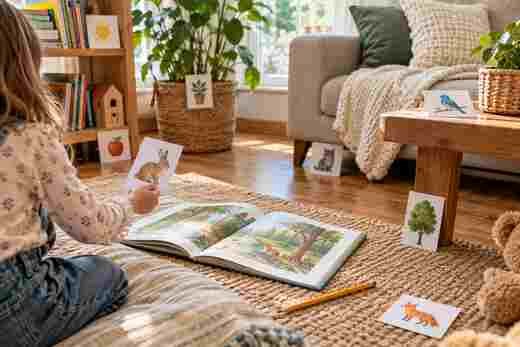
Hide simple word cards or picture cards around the room. Give children clues that encourage them to read, identify letters, or match words with pictures.
For younger children, use alphabet letters and simple images. Older children can follow written clues or solve short reading challenges before moving to the next location.
This activity makes reading active and exciting while helping children improve vocabulary and comprehension.
2. Build a Math Counting Station
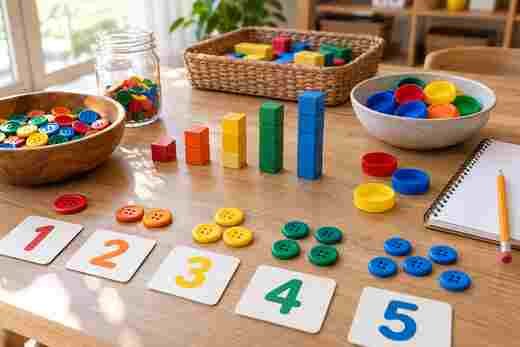
Place buttons, blocks, bottle caps, or toy objects in a bowl. Ask children to count, group, compare, and arrange them.
Try activities such as:
- Count objects into groups of five
- Find which group has more
- Create simple addition problems
- Arrange objects from smallest to largest
- Sort objects by color or shape
Younger children can practice numbers and one-to-one counting. Older children can work with multiplication, fractions, or simple word problems.
3. Make a Homemade Weather Chart
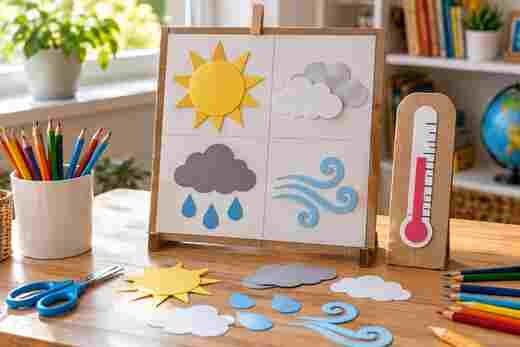
Create a weekly weather chart using paper, drawings, and simple symbols. Each day, ask children to observe the sky and record whether it is sunny, cloudy, rainy, windy, or cold.
Add extra details such as:
- Temperature
- Clothing needed
- Time of sunrise or sunset
- Changes in plants or trees
- Amount of rainfall
This activity encourages observation, recording, comparison, and early science skills.
4. Design a Cardboard Building Challenge
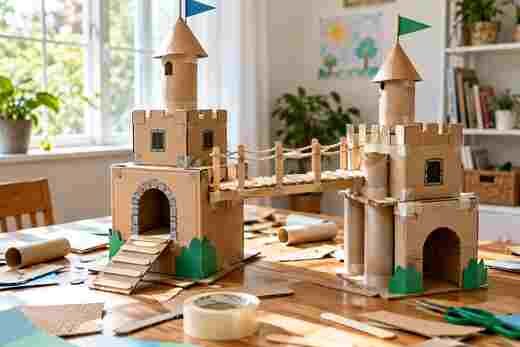
Give children cardboard boxes, paper tubes, tape, and craft sticks. Ask them to build a bridge, tower, house, school, or imaginary city.
Set a simple challenge, such as:
- Build the tallest tower
- Make a bridge that holds a toy
- Create a house with three rooms
- Build a structure using only ten pieces
- Design a playground
Children practice planning, engineering, balance, measurement, and problem-solving while they build.
5. Start a Simple Science Observation Journal
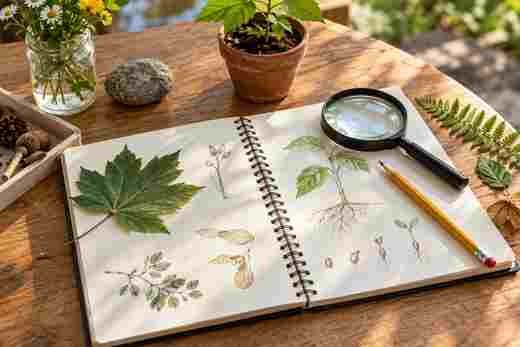
Give children a notebook and ask them to observe one object or living thing for several days. They could study a plant, a leaf, an insect, a rock, or the moon.
Encourage them to record:
- What they see
- What changes
- What stays the same
- Questions they have
- A drawing each day
This activity helps children develop patience, attention to detail, and basic scientific thinking.
6. Play a Memory and Matching Game
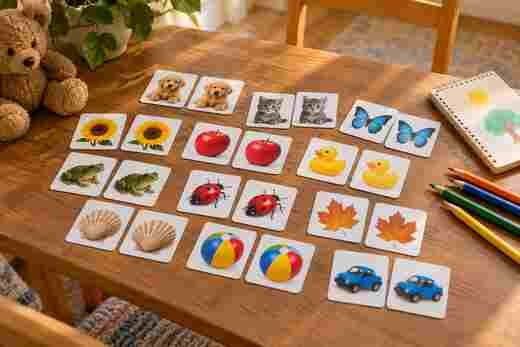
Create pairs of cards using paper. Cards can include letters, numbers, animals, shapes, vocabulary words, or matching pictures.
Place the cards face down and let children turn over two cards at a time. If they find a matching pair, they keep the cards and take another turn.
For older children, make the game more challenging by matching:
- Words and definitions
- Multiplication problems and answers
- Countries and capitals
- Animals and habitats
- Historical figures and achievements
Memory games support concentration, recall, and language development.
7. Measure a Room or Household Objects
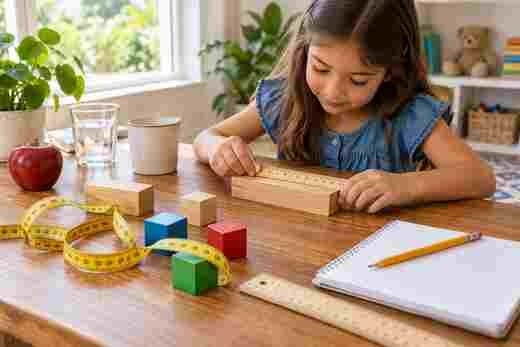
Give children a ruler, measuring tape, or non-standard measuring tool such as blocks or footsteps. Ask them to measure safe household objects.
They can measure:
- The length of a table
- The height of a chair
- The width of a book
- The size of a toy
- The distance between two objects
Younger children can compare longer and shorter objects. Older children can record measurements, convert units, and calculate differences.
8. Create a Storytelling Dice Game
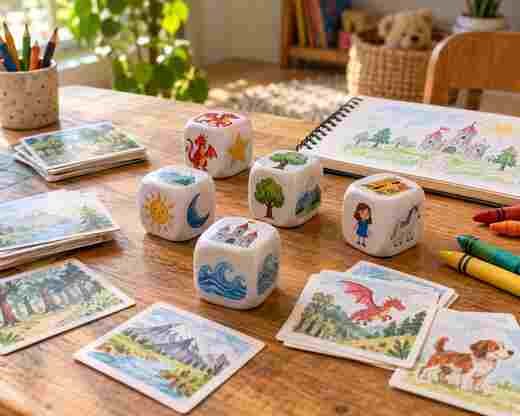
Make paper cubes or use dice with pictures, colors, or words written on each side. Children roll the dice and use the results to create a story.
One die could show:
- A character
- A place
- An object
- A problem
- An emotion
- An action
Ask children to create a beginning, middle, and ending. Younger children can tell the story orally, while older children can write it in a notebook.
This activity supports imagination, vocabulary, sequencing, and communication.
9. Explore Nature With a Scavenger Hunt
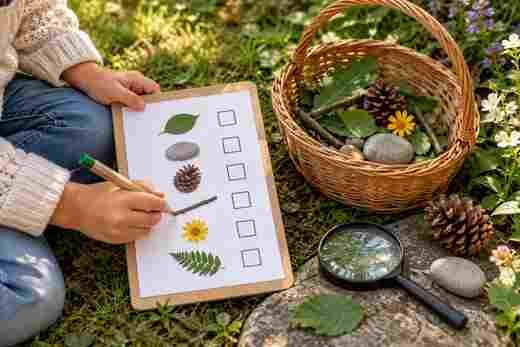
Create a list of safe things children can find outdoors or around the home. Include items such as a smooth stone, a yellow leaf, a small stick, a flower, a feather, or something shaped like a circle.
Remind children not to touch unknown plants, insects, or unsafe objects. They can draw or photograph items instead of collecting them.
After the hunt, ask children to sort their findings by color, texture, size, or natural material.
10. Practice Money and Pretend Shopping
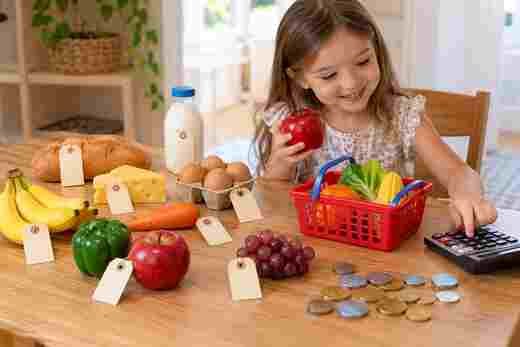
Create a pretend store using empty food boxes, toys, paper labels, and play money. Give children a shopping list and a budget.
Younger children can practice:
- Naming coins
- Counting objects
- Matching prices
- Recognizing numbers
Older children can practice:
- Adding prices
- Finding change
- Comparing costs
- Staying within a budget
- Calculating discounts
Pretend shopping turns everyday math into a practical life skill.
How to Make Learning Activities More Enjoyable
- Let children choose some of the activity materials.
- Keep instructions short and clear.
- Allow children to make mistakes without immediately correcting them.
- Ask questions instead of giving every answer.
- Adjust the difficulty for different ages.
- Take breaks when children become tired.
- Display drawings, charts, and completed projects.
- Connect activities to the child’s interests.
Final Thoughts
These 10 educational activities for kids combine learning with creativity, movement, observation, and play. They can be used at home, in classrooms, during holidays, or whenever children need an engaging screen-free activity.
The goal is not to make every activity perfect. The most valuable learning often happens when children ask questions, test ideas, solve problems, and explain what they discovered.